

Persian Turquoise: Stone of Love and Fortune in Persian Poetry
Poetry is the art of adorning language with beauty, and Persian poets have long drawn inspiration from the most exquisite elements of their world. Among

In the dusty hills of northeastern Iran, about 50 kilometres from the historic city of Nishapur, lies what many consider the world’s greatest turquoise treasure: the legendary mines of Ma’dan. Here, in the shadow of the Ali-Mersai mountain, miners have extracted the finest turquoise known to humanity for nearly seven millennia, creating a continuous thread of craftsmanship that stretches from the dawn of civilisation to the present day.
The robin egg blue or sky blue colour of the Persian turquoise mined near the modern city of Nishapur, Iran, has been used as a guiding reference for evaluating turquoise quality. This isn’t merely marketing hyperbole – it represents geological and gemological reality. Arguably, the world’s finest specimens of turquoise have come from this deposit.
The Turquoise Neyshabur Mine is considered the oldest turquoise mine in the world. The mine is the largest turquoise mine in terms of production, as well as the oldest active mine in the world. The mine has been active for all these 7,000 years, making it not just a source of gemstones, but a living archaeological site where ancient techniques blend with modern necessity.
The turquoise deposits of Nishapur formed through a complex geological process that created perfect conditions for this rare mineral. Turquoise in weathered trachyte characterises these deposits, where copper-rich volcanic rocks provided the essential elements, while specific hydrothermal conditions created the chemical environment necessary for turquoise precipitation.
The scientific understanding reveals why this location produces superior stones. Persian turquoise refers to turquoise gemstones mined in Iran, historically known as Persia. It is prized for its intense, sky-blue to greenish-blue colour, often with intricate veining or matrix patterns, which enhance its beauty.
The archaeological evidence from Nishapur’s turquoise mines reveals sophisticated mining engineering that rivals modern techniques in ingenuity, if not in scale. The ancient miners created an extensive network of interconnected tunnels and galleries, supported by carefully engineered stone pillars and wooden buttresses to prevent collapse.

These weren’t random excavations but systematic operations with multiple named workings. Historical records from the medieval period document specific galleries:
Each gallery had its own characteristics and produced turquoise with distinct qualities, suggesting that ancient miners understood geological variations with remarkable precision.
Ancient Persian miners developed a sophisticated classification system for turquoise that demonstrates their deep understanding of the mineral’s variations. Medieval sources document turquoise being categorised into specific types: Abul-Ishaqi, Azhari, Soleimani, Zarbumi, Khaki, Abdul-Majidi, Andalibi, and various Persian and “tree-like” varieties.
This wasn’t just commercial grading – it reflected genuine geological knowledge. The colour variations they recognised correspond to what modern science now understands as different mineral compositions within the turquoise group:
Classic Blue Turquoise (CuAl₆(PO₄)₄(OH)₈·4H₂O): The standard that gives the stone its name, containing copper and aluminium in optimal proportions.
Green Varieties (Chalcosiderite): Where iron substitutes for aluminium (CuFe₆(PO₄)₄(OH)₈·4H₂O), creating apple-green to dark green stones.
Pale Variants (Planerite): With different phosphate arrangements (Al₆(PO₄)₂(PO₃OH)₂(OH)₈·4H₂O), producing lighter blue-green stones.
Ancient miners recognised these distinctions empirically, developing extraction techniques optimised for each variety long before modern chemistry explained the underlying reasons.
The traditional turquoise mining techniques developed at Nishapur represent centuries of accumulated wisdom. Miners worked by oil lamp light in narrow galleries, following veins of turquoise through the weathered volcanic rock. The work was dangerous and required extraordinary skill to distinguish valuable turquoise from similar-looking but worthless minerals.
Tools were simple but effective: iron picks to break rock, wooden hammers to avoid damaging delicate turquoise, ceramic oil lamps for illumination, and woven baskets to carry extracted material to the surface. Stone hammers and anvils were used to carefully extract turquoise from its matrix rock without fracturing the valuable gemstone.
The mining process followed natural geological features, with galleries extending along turquoise-bearing zones. When miners encountered unstable ground, they installed timber supports and stone pillars using techniques that modern mining engineers still recognise as sound practice.
This gemstone has been treasured for thousands of years for its vivid hue and has been used in jewellery, decorative arts, and religious objects across various civilisations. But not all turquoise was created equal, and Persian miners developed a sophisticated understanding of quality grades that remains relevant today.
The finest grade, known as “royal” turquoise, came from specific sections of the Ardolai cave and represented perhaps 1% of total production. This material displayed the perfect robin’s egg blue colour with no matrix, high hardness, and exceptional lustre – qualities that made it suitable for the most prestigious applications.
Standard commercial grades included various levels of matrix (host rock patterns), colour variations from sky blue to blue-green, and different hardness levels. Even the lower grades from Nishapur typically exceeded the quality of turquoise from most other world sources.
More than 1400 turquoise stones associated with 98 archaeological artifacts from Egypt, the Near East, and Central Asia were analysed using non-invasive techniques, revealing the extent of ancient turquoise trade networks. Many of these analysed stones trace back to Persian sources, demonstrating the global reach of Nishapur turquoise in antiquity.
Archaeological excavations at turquoise sites have uncovered evidence of continuous mining activity spanning millennia. Ancient mining tools, ceramic vessels, oil lamps, and even preserved wooden supports provide tangible evidence of the techniques used by generations of miners.
Carbon-14 dating of organic materials from the mine workings confirms continuous or repeated activity over thousands of years, making these operations among the longest-running industrial sites in human history.
Modern turquoise mining faces challenges that ancient miners didn’t encounter: market demand for consistent quality and the widespread use of treatments to enhance inferior material. Most turquoise worldwide requires stabilisation with polymers or resins to achieve jewellery-grade hardness and durability.
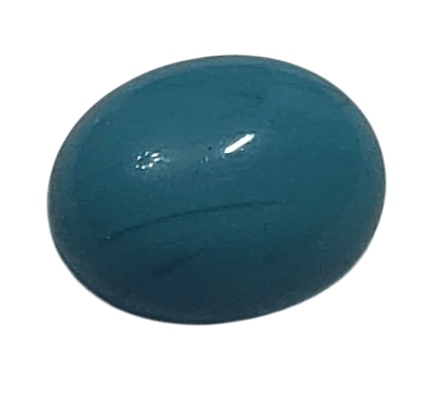
Nishapur turquoise stands apart because much of it achieves gem quality in its natural state. This natural superiority explains why genuine Persian turquoise commands premium prices and why the distinction between treated and natural stones has become economically crucial.

The cultural impact of Persian turquoise extends far beyond its monetary value. The word turquoise dates to the 17th century and is derived from the Old French turquoise, meaning “Turkish” because the mineral was first brought to Europe through the Ottoman Empire. This linguistic journey reflects the complex trade routes that carried Persian turquoise across continents.
In Persian culture, turquoise held spiritual significance as a stone of protection and divine favour. The deep blue colour was associated with the heavens, and high-quality turquoise was believed to change colour to warn of danger or ill health.
The challenge facing modern turquoise mining is balancing continued extraction with preservation of this unique geological and cultural heritage. The Nishapur deposits, after millennia of mining, show signs of depletion in the most accessible high-grade zones.
Reports on the geology, background, and current state of mining and production at Iran’s largest turquoise mine indicate ongoing efforts to understand and potentially revitalise these historic operations using modern techniques combined with traditional knowledge.
The challenge is significant: how to continue a 7,000-year tradition of turquoise mining while adapting to modern safety, environmental, and economic requirements. The answer likely lies in selective, high-quality extraction that honours both the geological rarity of the resource and the cultural significance of the tradition.
The turquoise mines of Nishapur represent more than just a source of beautiful gemstones – they embody one of humanity’s longest continuous industrial traditions. From the first miners who followed surface outcrops deep into the Ali-Mersai mountain to modern attempts at revitalising production, this site connects us directly to the dawn of systematic mineral extraction.
The techniques developed here influenced mining practices across the ancient world. The quality standards established by Persian turquoise became the benchmark against which all other turquoise is measured. The trade networks that carried these stones helped build the economic foundations of multiple civilisations.
Today, as we consider the future of this ancient industry, we face the same fundamental questions that have challenged miners for millennia: How to extract maximum value while preserving the resource for future generations? How to maintain quality standards while meeting market demands? How to honour traditional knowledge while embracing beneficial innovations?
The answers to these questions will determine whether the 7,000-year story of Persian turquoise mining continues into its eighth millennium, or whether this remarkable tradition becomes merely a chapter in the history of human achievement. Either way, the legacy of Nishapur’s turquoise mines will continue to influence our understanding of both geological treasures and human ingenuity for generations to come.
Poetry is the art of adorning language with beauty, and Persian poets have long drawn inspiration from the most exquisite elements of their world. Among

Turquoise: Persian miniature paintings are windows into the past – exquisite artworks that reveal not just aesthetic sensibilities, but the social customs, beliefs, and material

For thousands of years, turquoise has held a special place in the hearts and homes of the Iranian people. Unlike many precious stones that remain